

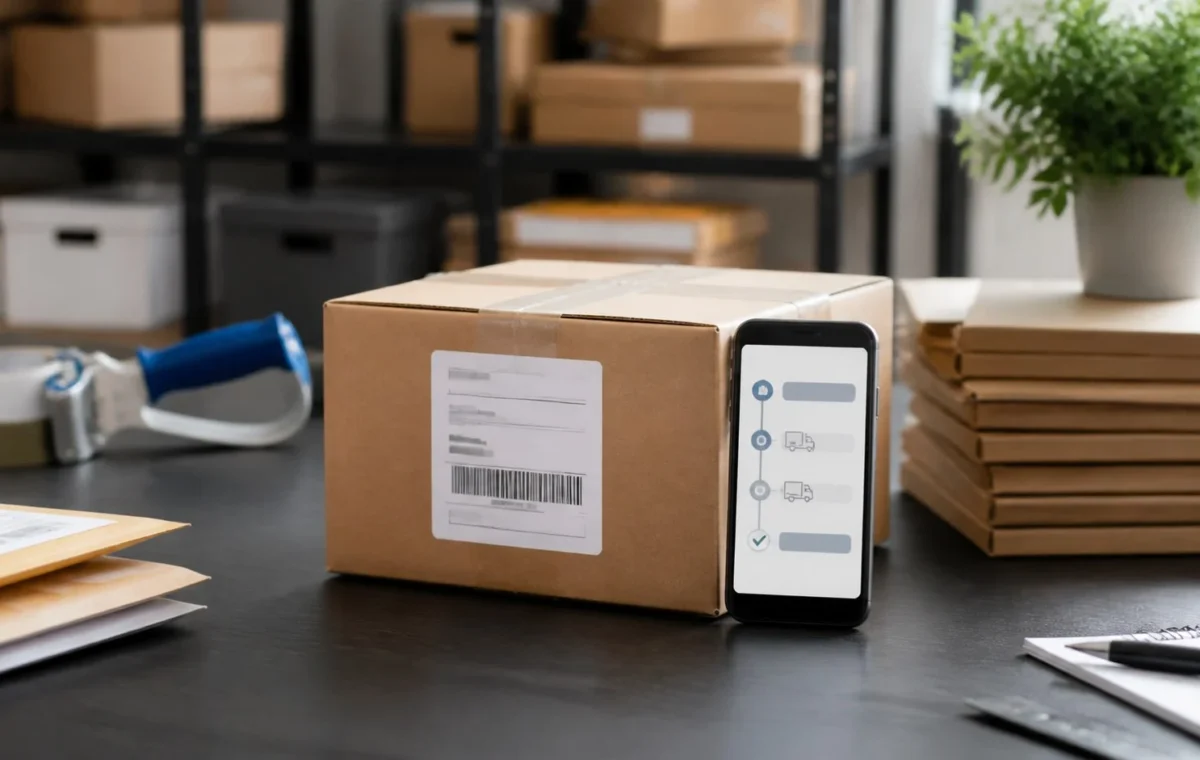
When a parcel looks late, many ecommerce teams ask the same operational question: should we notify the customer before they contact support?
There is no universal rule that every carrier delay deserves a manual email. But waiting until a customer discovers a mismatch on their own is rarely a reliable service process. The right approach is to build a simple delay-communication rule around the delivery promise shown at checkout, the latest tracking event and the information your store can actually verify.
This guide explains a practical way to do that in Shopify. It does not promise that a notification will remove every complaint. It helps the operations team make sure the customer, the order-status page and the internal team are working from the same facts.
Start with the promise the customer received
The first question is not “is the carrier late?” It is “what delivery expectation did the customer see?” In Shopify, delivery time combines fulfillment time and carrier transit time. Delivery-date settings can display an estimated date or date range at checkout, in order confirmations and later order pages.
That means a shipment can be moving normally from a carrier’s perspective while still missing the expectation the store set. Conversely, a package that has not had a new scan for a day may still be inside the delivery range promised to the customer. Treat those two situations differently.
Before creating a delay workflow, audit the underlying fulfillment settings. Shopify says fulfillment time is used to calculate delivery dates at checkout. If the store’s processing time is consistently longer than the configured value, a notification workflow will only be treating the symptom. Correct the promise before adding more messages.
Use tracking as evidence, not as a substitute for judgment
After a tracking number is added to a fulfilled Shopify order, customers can follow delivery through the order-status page, shipping emails and the Shop app. Shopify also supports tracking links for many carriers, whether labels were bought in Shopify or tracking was added manually.
That gives a merchant several useful signals: whether the shipment has been picked up, is in transit, is out for delivery, has an attempted delivery, has a failed delivery, or has no carrier status yet. It does not turn every status into the same kind of customer communication.
For example, “label created” without an acceptance scan may be an internal fulfillment exception rather than a carrier delay. An attempted delivery may require an action from the customer. A shipment moving normally but projected to arrive after the displayed date may call for a short, factual update. Build separate paths for each condition.
Define a sensible notification threshold
Pick a threshold the team can apply consistently. A modest starting rule is to review an order when at least one of the following is true:
- the latest estimated delivery date has passed;
- the carrier reports an exception, failed delivery or return-to-sender event;
- the parcel has no acceptance or movement scan beyond the store’s normal handling window;
- the carrier has updated the expected date materially beyond the date shown to the customer; or
- a high-value or time-sensitive order has an identified risk that the team can verify.
Keep the rule linked to actual data. Do not automatically label an order “lost” because a scan is late, and do not tell a customer the package will arrive on a new date unless that date comes from a carrier update or a support agent has a documented basis for it.
Make the order-status page the source of truth
Shopify describes the order-status page as the primary place customers track a shipment. Customers can reach it through their account, a tracking link in the shipping confirmation or an order-number verification flow. That page should be checked by your team before any manual message is sent.
Verify the carrier, tracking number and tracking URL. If the carrier was not recognized automatically, Shopify allows the merchant to select the correct carrier or use another carrier option with a full tracking URL. A broken or incorrect link creates the same anxiety as a missing update.
Use the same tracking link in the customer message. Do not force the customer to search their inbox for an old confirmation. A short message that contains the order reference, what has changed, the current verified tracking path and the next review point is usually more useful than an elaborate apology.
Write a factual delay message
A proactive message needs only four pieces of information:
- acknowledge that the delivery is taking longer than expected;
- state the latest verified shipment status without guessing about the cause;
- link to the order-status or carrier tracking page; and
- give a specific next step, such as when the team will review it again or what to do if the order has not arrived by a stated date.
Avoid language such as “your package is definitely arriving tomorrow” when the carrier has only reported that it is in transit. Likewise, do not promise a refund, replacement or shipping credit in an automated notice unless the store’s policy and support authority make that promise accurate.
Prevent delays before they reach the carrier
The biggest avoidable failure often happens before handoff. Shopify notes that fulfillment time includes reviewing the order, printing labels, packing and handing the shipment to the carrier. If your team routinely prints a label at the end of the day but the carrier collects it the next morning, align the fulfillment-time setting and customer expectation to that operating reality.
For stores that display delivery dates, Shopify supports automated dates that use shipping performance for eligible US domestic orders, as well as manual dates based on fulfillment and transit time. Review the feature you use after promotions, warehouse changes or a new fulfillment partner. A delivery promise should be updated when the operational model changes, not after support volume climbs.
Stock and routing data matter as well. Shopify’s fulfillment setup supports locations, inventory and order-routing rules. If a product is available only at a slower location but the checkout promise assumes the faster location, the communication problem begins before the label is created.
Measure the workflow, not just the inbox
Track how many orders trigger the delay review, how many had no tracking acceptance scan, how many missed the displayed delivery date and how many generated a customer contact before and after the notification rule. Also sample messages for accuracy. If agents are correcting the same wrong carrier or date, fix the data source rather than adding more templates.
A proactive notification is successful when it gives the customer a truthful next step and gives the team an auditable response. It is not a substitute for fast fulfillment or dependable carrier performance.
A simple rollout this week
Choose one shipping method and run the process for two weeks. Confirm the checkout delivery promise, list the tracking exceptions your team can see, write one factual message template and assign an owner for follow-up. Then compare the affected orders with support contacts and delivery outcomes.
When the workflow is grounded in accurate dates, correct tracking and a clear next review point, customers get better information before frustration turns into a ticket—and the operations team gets a repeatable way to act.